“To Plan a Future for Our Past”
By: Alex Morales, Summer Intern
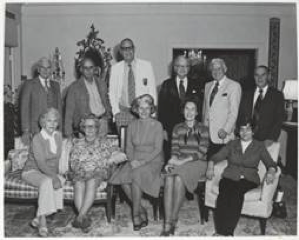
In the late 1970s, the City of Jacksonville Beach moved forward with plans to further urbanize the area. With urbanization efforts in full swing, Jacksonville Beach resident, Mrs. Jean McCormick, became concerned for the lack of historical preservation efforts and available information regarding her hometown’s past. On February 22, 1978, Mrs. McCormick and her Husband, J. T. McCormick invited a group of friends over to their house for cherry pie to celebrate President George Washington’s birthday.
She discussed the need to increase community awareness, preservation efforts to protect significant structures and landmarks and, most of all, to celebrate the rich history of the Beaches. With that, the friends formed the Beaches Area Historical Society. Their mission became “to plan a future for our past.” With that mission in mind the group set out to create a comprehensive history by designating Mayport, Atlantic Beach, Neptune Beach, Jacksonville Beach, Ponte Vedra Beach, and Palm Valley, Florida as the Beaches Area.
Gathering local support and funding became a forefront issue. The Society spread their mission through 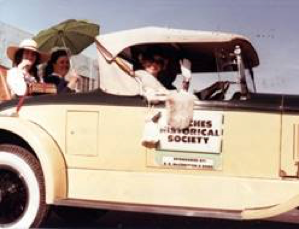 word of mouth, letters amongst friends, running newspaper articles, as well as networking with other historical preservation groups and city council members. Likewise, the Society became heavily involved in local community activities. The April Opening of the Beaches parade signaled an early turning point for the Society. With a massive community turnout, an unexpected explosion of a nearby buggy during the parade ignited community awareness of the Society. Mr. Charles Cook Howell, Jr. wrote in a small note to Mrs. McCormick stating, “a true Champion has started the society off with a bang! This certainly argues well for the future.”
In the following months, the Society saw a jump in membership and elected their first Officers and Board Members. In July, they created an official logo and drafted their first newsletter to mail members in the community. By October, the Society organized their first historical exhibits. Not having a facility or museum did 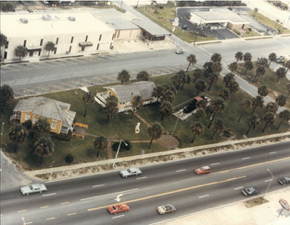 not stop them from putting one together. They utilized two small spaces in the Ocean State Bank and Beaches Guaranty Bank to display two exhibits “full of Memorabilia” that even included a 100,000 year old mammoth tooth.
It was not until March 1, 1979 that the Society became a registered nonprofit organization. With an official title in hand, they arranged quarterly talks for members and invited the extended Beaches community to listen to lectures on local history. In May, Jacksonville Beach City Council approved the Society’s petition for a flat-ironed shaped property located between Beach Blvd and Pablo Ave to establish a historical park. They 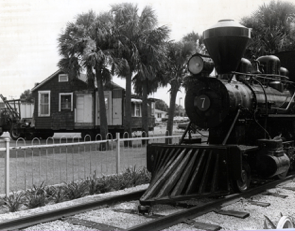 appropriately named it Pablo Historical Park after Jacksonville Beach’s previous name. The park eventually became home to five “at risk” structures, items, memorials, and markers representing and celebrating the bygone era of the Beaches Area. However, the addition of the Beaches Museum and History Center in 2006 ushered a new phase of the Society’s role in the community.
After forty years, the Beaches Area Historical Society continues to be a staple of the Beaches Area community. Despite the passing of time and a changing landscape, the spirit of the Society continues to endure with its new mission: “to preserve and share the distinct history and culture of the Beaches area.”
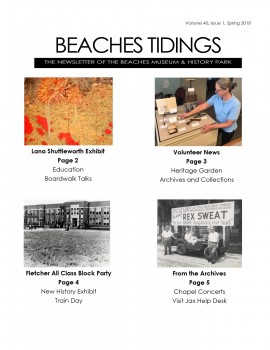 The Spring 2018 issue of Beaches Tidings, The Newsletter of the Beaches Museum & History Park, is now available. Click
 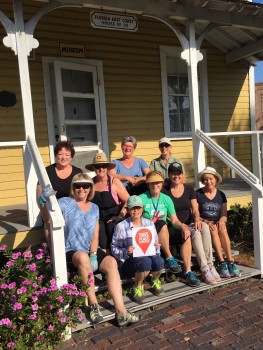 Jacksonville Beach. Located on Beach Blvd at the Beaches Museum & History Park, the garden, a Duval County Extension Demonstration Garden, is maintained by Master Gardener volunteers with the purpose of community education in gardening practices.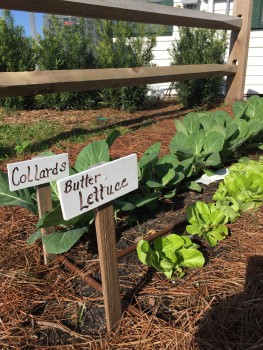
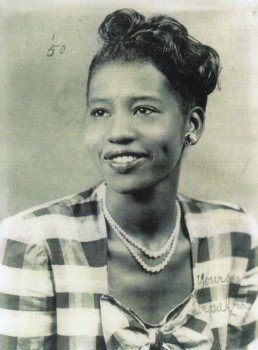 Orpah Jackson was, and continues to be, an important member of the Beaches community; working as a teacher for 55 years and actively participating in community projects. Born on June 15th, 1920 in Lumpkin, Georgia, her family later moved to a small neighborhood in East Mayport, Florida when she was 6 years old. This move was influenced by her mother’s desire to provide a better education for Orpah and her brother.
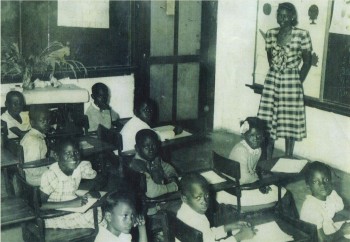 In 1946 she moved back to Duval County and began a job as teacher and principal of 19 African American students in Mayport Village. When that school was closed in 1948, she began teaching 2nd grade at School #144 in Jacksonville Beach. Here, Orpah taught a wide range of subjects to her 2nd graders including reading, math, music, and physical education for 20 years.
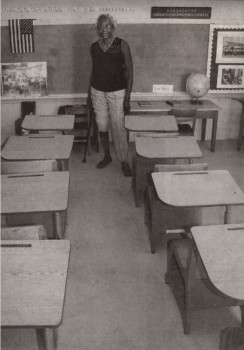 Orpah was involved with many projects including the coordination of the integrated Vacation Bible School for the local churches, working with Meals on Wheels as a member of Church Women United, providing assistance to the neighborhood through the Donner Community Development Corporation, and serving as the first African American woman in Atlantic Beach to work on the voting Precinct. She currently serves as a member and Treasurer on the Board of the Rhoda L. Martin Cultural Heritage Center, which works to preserve the history of School #144 where her old classroom is on display.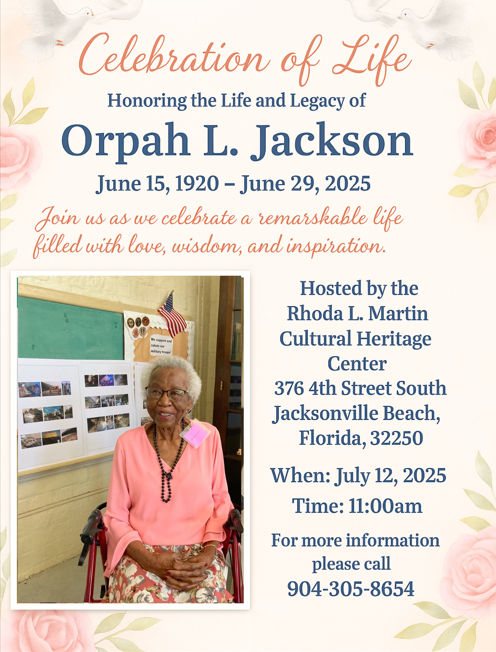
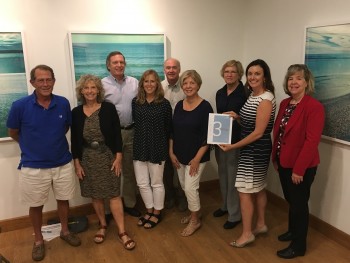 The Beaches Museum & History Park’s Board of Directors started its 2017-2018 year strong with the presentation of its new Strategic Plan. The 10-month process was supported by the Community Foundation and was facilitated by Jana Ertrachter, the Ertrachter Group, who brought years of experience guiding organizations through the Strategic Planning Process.
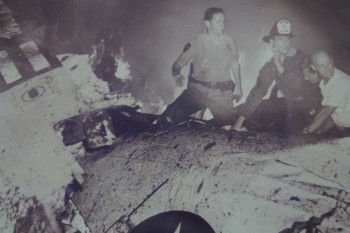 Rush Abry, a well-known Beaches photographer, managed to capture the only image of the crash site after wading through chest-high water to reach a tiny island where the patrol plane crashed and burned upon impact. His stunning black-and-white photo of four first-responders straddling the plane’s crumpled fuselage as a fire blazes behind them won a state press award for on-the-spot photography.
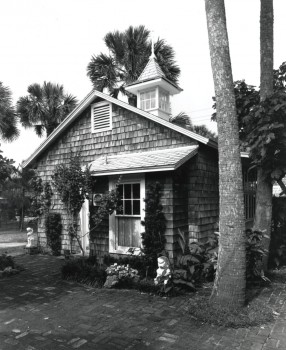 The unique and memorable buildings of Atlantic Beach have greatly contributed to the character of this community throughout its life. The Continental Hotel – a monumental structure built at a time when there were almost no other buildings around – set the tone for the future of the community. The people who shaped Atlantic Beach in its early days hoped to form a more upscale community that drew in more elite residents. From converted carriage houses to a “hobbit house,” this trend has led to some of the most unique structures in the Beaches communities. The buildings mentioned below are just a few examples of the architecture found in Atlantic Beach throughout the years.
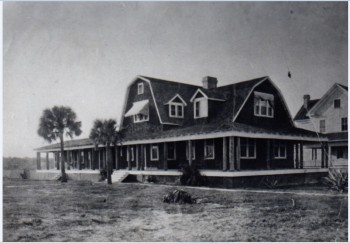 The Bull House. Built around 1902, this house represented some of the earliest construction in Atlantic Beach. The home of several members of the Bull family over the years, it was a longtime landmark in Atlantic Beach.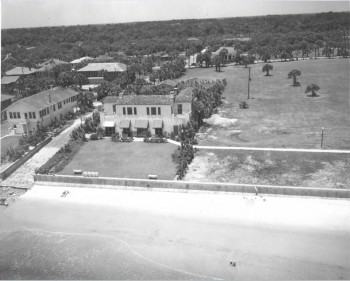
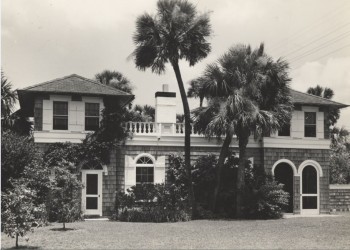 Abri. This Italian Renaissance Revival style house built around 1934 was originally owned by Broadway legend Lawrence Haynes. In his autobiography, “Joyous Life of a Singer”, Haynes attributes the name to a phrase used in World War I: “Vite a L’Abri,” which meant “Quick to the place where we are safe – where no harm can reach us.”