
A Legacy of Golf in Atlantic Beach
 When discussing golf in the Beaches area, most will look towards Ponte Vedra Beach, particularly TPC Sawgrass and the annual PLAYERS Championship. However, Atlantic Beach has its own storied history in the world of golf.
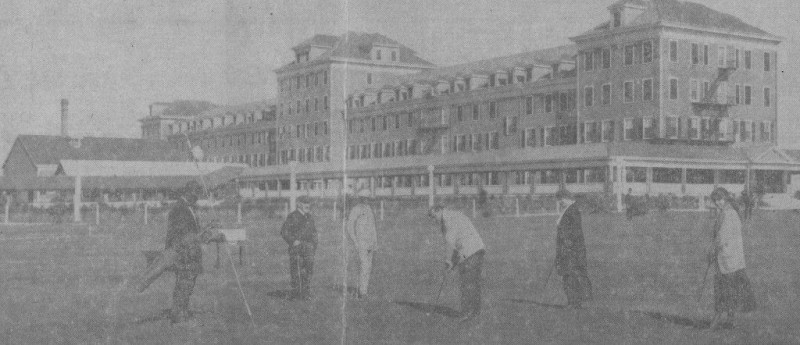
The Continental Hotel introduced the first golf courses to Atlantic Beach. While there was a large 18-hole course for guests to enjoy, a more unique course lay within the grounds, mere feet away from the train station and hotel itself. Famed golf course designer A. W. Tillinghast created a smaller 9-hole course called a Lilliputian Golf Course, which was a reference to the novel Gulliver’s Travels by Jonathan Swift. These courses were also connected to an early Atlantic Beach Country Club.
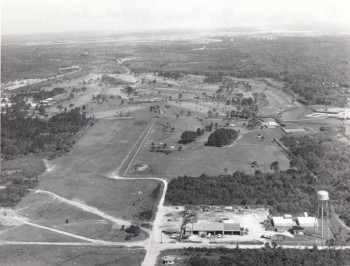 The Selva Marina Country Club, a project initiated by Harcourt Bull, Jr., opened in 1958. Well received in the area, it featured a golf course designed by E. E. Smith and quickly grew to include tennis courts, a swimming pool, and a residential community. Selva Marina soon became an important and internationally recognized part of the community. It is best remembered as the birthplace of the Greater Jacksonville Open in 1965. Years later, this tournament became what is now known as the PLAYERS Championship. Playing host to many of golf’s greatest players including Arnold Palmer and Jack Nicklaus, Selva Marina created a name for itself in golf history. The Lady Jacksonville Open was also held at Selva Marina in 1975.
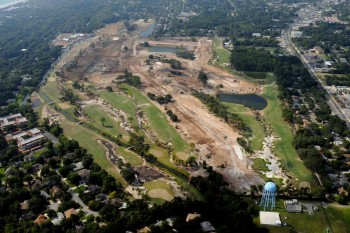 Today, the new Atlantic Beach Country Club continues Atlantic Beach’s golfing legacy at the site of old Selva Marina Country Club. In addition to the 6,815 square foot course redesigned by Erik Larsen, Atlantic Beach Country Club currently includes a neighborhood with 178 homesites, tennis courts, fitness facility, a junior Olympic swimming pool, and a 16,000 square foot clubhouse. Opened in January 2015, the revitalized 18-hole course was named as one of the nation’s Best New Courses by Golf Digest Magazine in 2014. The Web.com Tour Championship, part of the PGA TOUR, will be held at ABCC in Fall 2017.
Captions for Images used in the article
- “Continental Course from 1957 article” – A group of early 1900s golfers enjoying a round at the Continental Hotel.
- “P-4852”- An aerial view of Selva Marina Golf Course, date unknown.
- “20783-DSC_9992 (07.30.14)” – An aerial view of the construction of the Atlantic Beach Country Club, July 30, 2014. Image courtesy of the Atlantic Beach Country Club.
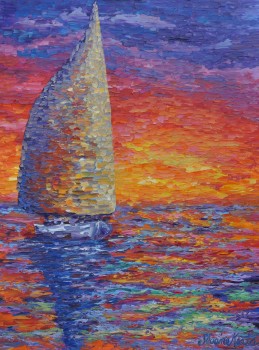 The winner of the 2017 Beaches Art Fest Poster Contest is Sloane Keats of Indialantic, Florida. Keats uses a layering technique and vivid colors to create a captivating texture in her paintings. Her entry “Alone” captured the essence of the event and its coastal community. “I bring a contemporary style to a traditional way to paint. Focusing on texture, color, pattern” said Keats.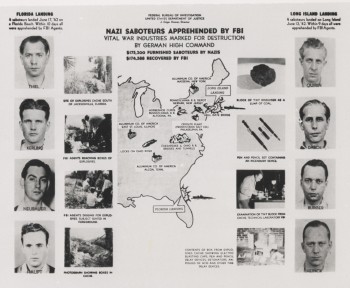
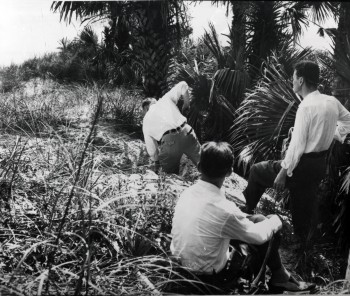
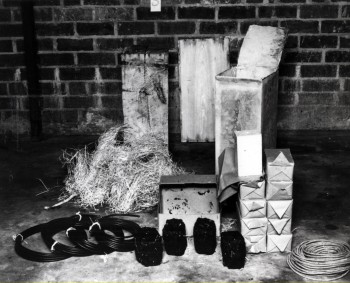
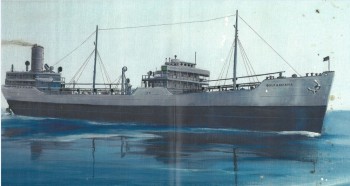 The night of April 10, 1942 started as a typical Friday night for people in the Beaches area. Jacksonville Beach was teeming with crowds kicking off their weekend with a visit to the boardwalk amusements, attending a dance at the pier, or catching the latest movie at the local theater. At approximately 10 p.m., however, the night took a very different turn.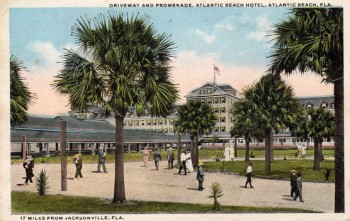
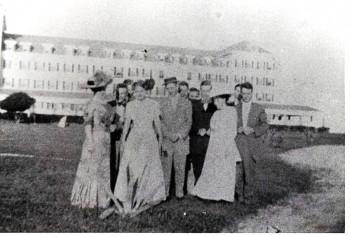 The Continental Hotel, constructed on the oceanfront in Atlantic Beach, opened in June of 1901. While it still featured luxury accommodations like Flagler’s other Florida resorts, it was simpler in design than hotels like the Ponce de Leon in St. Augustine. The hotel featured its own golf course, a detached veranda that wrapped around the hotel for lounging, an 800 foot ocean pier—the Atlantic Beach Pier—for fishing, picturesque drives around the area, and automobiling (racing) along the shore. Stretching along the oceanfront at 447 feet long and 47 feet wide, the wooden hotel provided a grand and palatial figure at the Atlantic Beach seashore. The building was yellow—a specific shade used by the FEC—with green shutters, accommodations for over 200 people, and a dining room that could seat 350 people. In advertisements for the hotel, the building was described as having an architectural design which was “perfectly balanced and pleasing to the eye” with its symmetry.
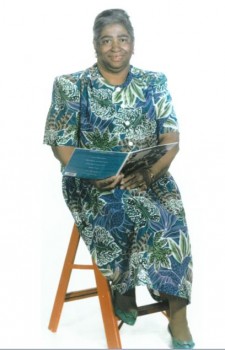 Margaret McQueen was a lifelong advocate for residents of the Beaches community and the first African American elected to the Jacksonville Beach City Council. She was born February 5, 1940, in Jacksonville Beach, Florida. In 1958, McQueen moved to Indiana where she started a family and returned to the Beaches area in 1969. Newly divorced and the mother of four, McQueen enrolled at the University of North Florida and graduated in 1974 with a degree in education. As a mother and second grade teacher at Seabreeze Elementary School, McQueen saw the issues of drugs, crime, and poverty eroding the Beaches neighborhoods. In 1989, she lead the Jacksonville Beach Community Action Co-op to address community issues of crime and to further increase the cooperative partnership between citizens and police.
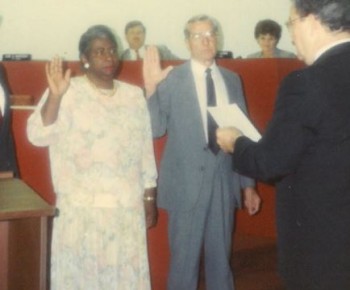 In 1991, at the age of 51, McQueen ran for the District 1 City Council seat. The election included the first ever district voting, which divided voters into geographic districts to choose their candidates. The District 1 City Council seat included the central and northeast sections of Jacksonville Beach, encompassing the same area where McQueen lived and raised her family. McQueen became the first African American elected to the Jacksonville Beach City Council on November 5, 1991, thus marking a historic moment for the Beaches community. She diligently served on the City Council from 1991 through 1994 and again in 1998. During that time, she saw the needs of the community improved. On June 29, 2013, McQueen passed away at the age of 73.
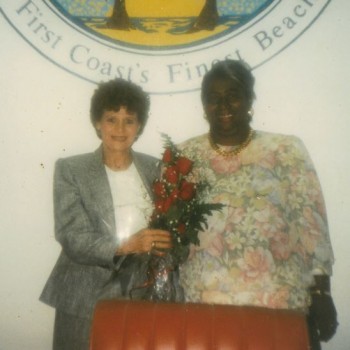 The legacy of McQueen included the positive change one woman brought to her community through her efforts of grassroots organizing and civic engagement. She brought equal representation to her district and stood firm in her convictions for the belief in the greater good not just of her community, but for all the surrounding communities of the Beaches. She strove to make the Beaches a better place to live and spearheaded the volunteerism of both blacks and whites. The Beaches community is forever grateful for the contributions and leadership of women such as Margaret McQueen.
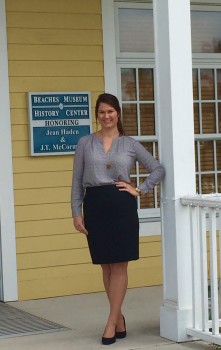 The Beaches Museum & History Park is pleased to announce the newest member of our staff, Brittany Cohill! Brittany will be assuming the role of Operations Manager as of December 2. Many of you are already familiar with Brittany due to her recent internship with us as she pursues her Master’s Degree through the UNF Department of History. Next time you see Brittany, be sure to wish her luck in her new endeavor!!