Sisterhood of Service: Fletcher High Grad Followed Siblings into Women’s Army Corps.
By Johnny Woodhouse
In 1972, Private Judy Teate completed her basic training at the Women’s Army Corps (WAC) Center at Fort McClellan, Alabama, becoming the third of her four sisters to join the military during the Vietnam War era.
A 1970 graduate of Fletcher High School, where she participated in school plays and chorus, Teate enjoyed writing poetry and was affectionately regarded as the baby of the family, according to her big sister Billie Harbison.


“Everybody who knew her loved her and only had good things to say about her,” said Harbison, who served as an Army nurse from 1968-1973. “I would do anything for Judy.”
While at Fort McClellan, Teate received instruction in Army history and traditions, administrative proceedings, military justice, first-aid, and field training.
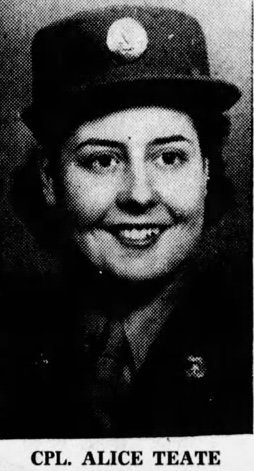
Created in 1942 to free up more men for combat roles, the women’s branch of the U.S. Army gained official military status in 1943.
More than 150,000 women served in the WAC during World War II, including Teate’s mother, Alice, a former WAC recruiter from 1943-1946.
“Growing up, we heard about her adventures as a WAC, so when the time came, we decided to do our part,” recalled Harbison, a former Army sergeant. “We were not particularly fond of the Vietnam War, but we wanted to be nurses and that’s what we did.”
WACs Capable Young Women
After her boyfriend was drafted, Marjorie Teate, a 1968 Flether High grad, was the first of her sisters to volunteer for the WAC. Harbison followed suit in July 1968, one of 29 recruits from Florida and South Georgia comprising the so-called Orange Blossum platoon.
WAC enlistees were required to serve a three-year enlistment and had a choice of several military occupational specialties, including communications, nursing and air traffic control. Upon completion of their military service, WACs were eligible for GI education benefits, just like their male counterparts.
“Back then, most parents who had four daughters could not afford to send all of them to college, so we knew we could take advantage of the G.I. Bill when we got out,” said Harbison, whose family moved to Jacksonville Beach in 1964.
During their eight weeks of basic training, WAC recruits assembled for daily inspections and marched everywhere on base, including to the chow hall. Members of the Orange Blossom platoon said the hardest part of their training was keeping their two-piece uniform clean and pressed.
“It could never be worn wrinkled and required ironing several times a day,” according to a 1968 feature story on the platoon in The Florida Times-Union.
“We want a highly disciplined, well-motivated capable young woman who will add to the achievements of the WACs,” a training officer said at the time. “By drilling and marching they learn to work together as a unit. Inspections teach them self-discipline and attention to details.”
Taught Combat Medics
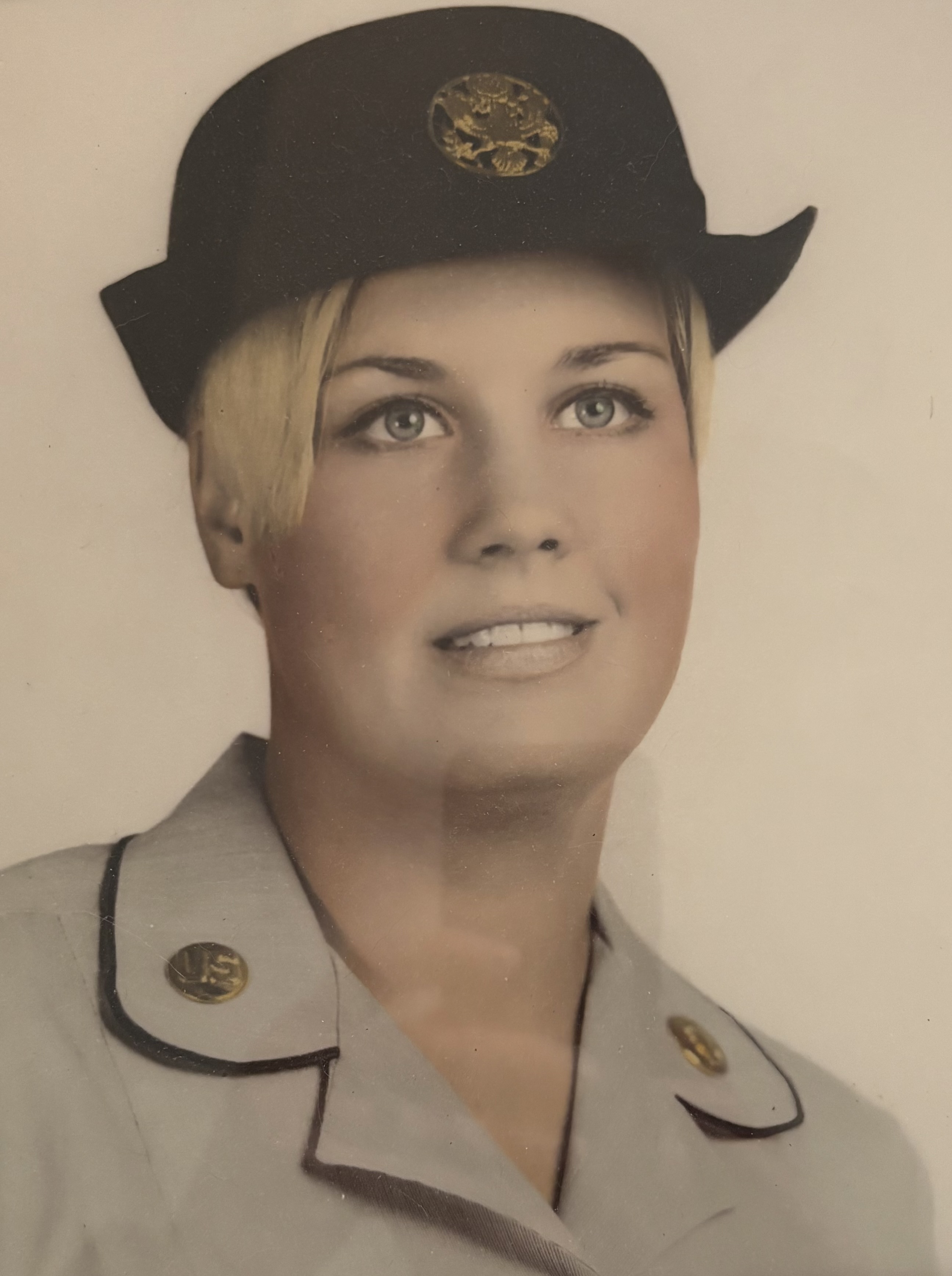
After graduating as the top recruit in boot camp, Harbison attended clinical specialist school at Fort Sam Houston in San Antonio, Texas, the central hub for training Army enlisted medical personnel, including combat medics.
Following her nine months of specialist training, Harbison was assigned to William Beaumont General Hospital in El Paso, Texas, which served as a key treatment center for returning wounded soldiers.
According to the Texas State Historical Association, the hospital served as a major teaching and research center during the war, transitioning into a modern outpatient and acute care facility in the early 1970s.
“We saw some horrible injuries, but I joined the Army to become a nurse because I knew those young men needed us,” said Harbison, who taught basic nursing skills to Army medics heading overseas. “Judy trained as a clinical specialist just like me, only her school was in Colorado.”
From Denver to the Desert
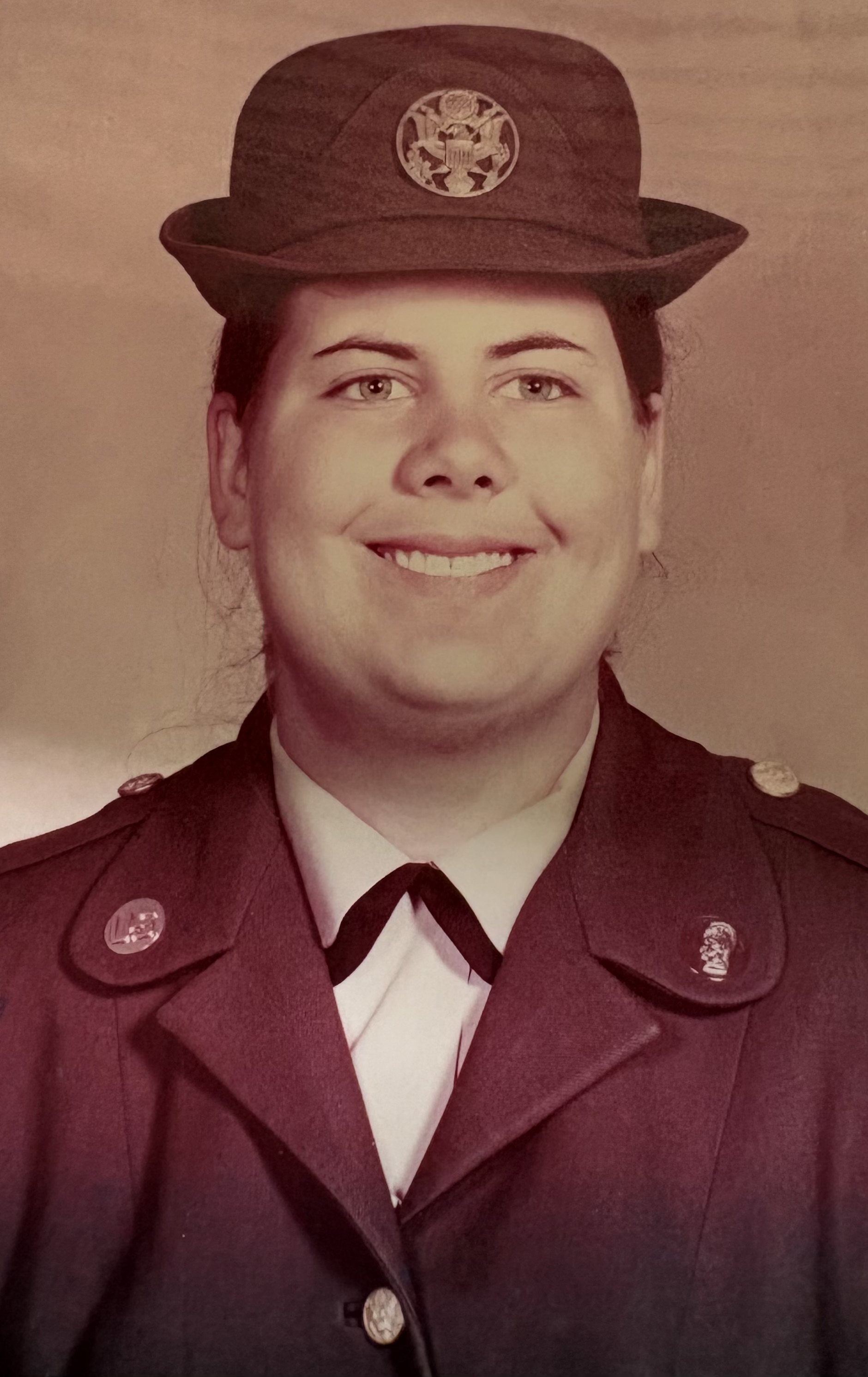
Following boot camp, Judy Teate was assigned to Fitzsimmons General Hospital, which functioned as a major air evacuation hub for severely injured Army personnel needing specialized care.
During World War I, the historic Army hospital, named in honor of the first American medical officer killed in combat, provided care for causalities suffering from chemical weapons and tuberculosis.
By the time Teate arrived there in 1972, the Denver-based medical center was still functioning as an essential facility for both the treatment and the training of medical personnel deployed to combat support roles.
Teate studied alongside Army medics, graduating with a level of medical proficiency which parallelled that of a licensed practical nurse.
In 1973, she received her first duty assignment to 110-bed Raymond W. Bliss Army Hospital at Fort Huachuca, Arizona.
At the time, Harbison was winding up her five-year Army enlistment with her sights set on a civilian nursing career.
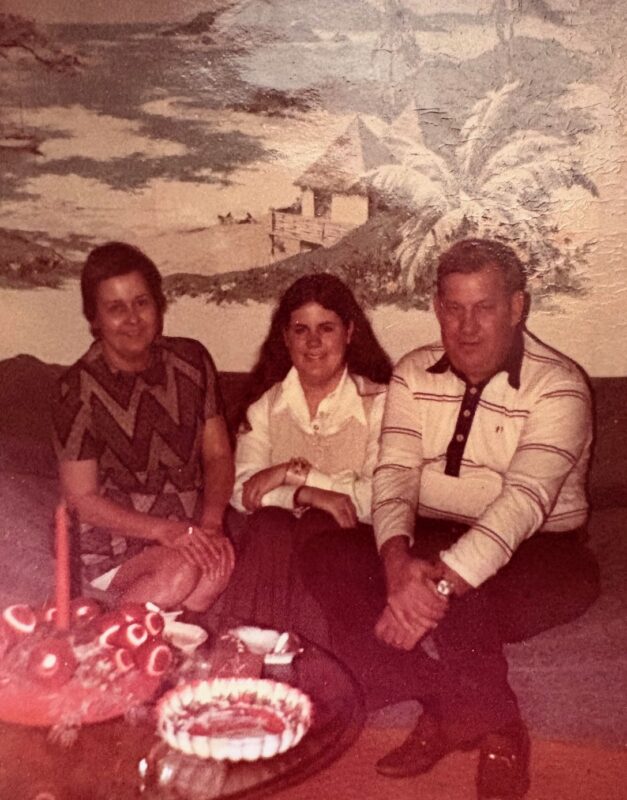
“When I got out of the Army, Judy was home on leave and we were able to spend some time together before my dad drove her out to Arizona,” Harbison recalled.
Angel on Earth
Located in Southeast Arizona, about 15 miles north of the Mexican border, Fort Huachuca is situated some 2,000 miles from the coastal confines of Jacksonville Beach.
Surrounded by arid landscapes and forested mountains, the historic Army base dates to 1877 and is known as the home of the “Buffalo Soldiers,” a famous Black calvary regiment in the West.
Soon after Judy Teate settled into her new Army post, tragedy struck.
While moving furniture and possessions into her upstairs living quarters, Teate apparently fell and fatally injured herself.
“When her roommate came home from the hospital, she found Judy unresponsive on her bunk,” Harbison said.
According to an autopsy, Teate’s cause of death was a ruptured pancreas, which can be caused by a traumatic injury. Harbison believes her little sister may have tripped and fallen on a flight of stairs and died suddenly from rapid internal bleeding.
“She was in perfect health when we last saw her,” said Harbison.
“Her death was such a shock. I told my mother we were lucky to have her for as long as we did because she was an angel. She was too good for this world.”
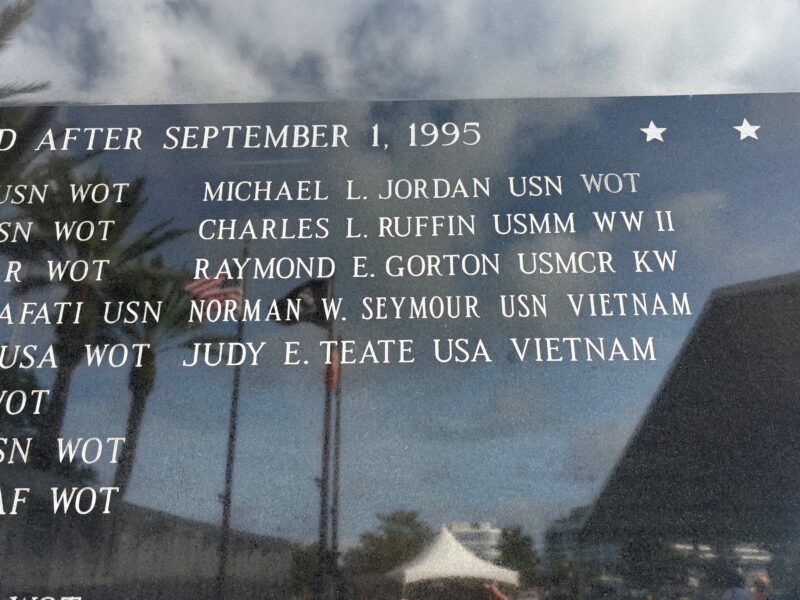
Pvt. Judy Teate, who was born at St. Vincent’s Hospital and grew up in a two-story house her grandfather built in the 2500 block of 1st Street South, was buried with full military honors at Warren Smith Cemetery in Jacksonville Beach.
“I know how much my service means to me and how much it meant to Judy,” said Harbison, a disabled veteran. “She knew how it felt to wear that uniform, and she wore it well.”
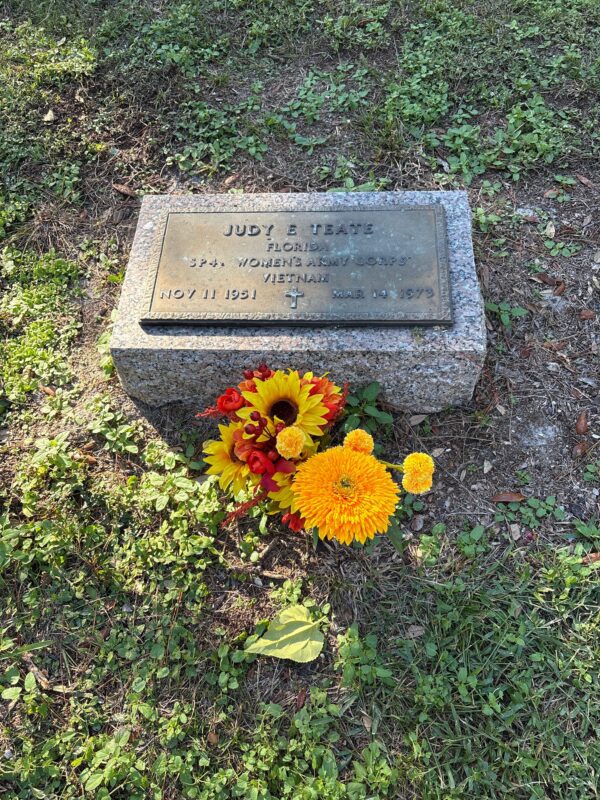
This Memorial Day, Judy Teate’s name will be added to the Veterans Memorial Wall in downtown Jacksonville.
Her military-style grave marker is in Section B1 of Warren Smith Cemetery. To locate it, visit the online burial search at jacksonvillebeach.org.