
September 1967 Mid-Air Collision Results in Death of Six Servicemen
Charlie Holbert was having dinner with his wife and two young sons on Wednesday, Sept. 27, 1967, when he first heard the roar of an approaching airplane flying dangerously low over his home in the Ocean Forest section of Jacksonville Beach.
The Southern Bell traffic engineer ran outside just in time to catch a fleeting glimpse of a U.S. Navy plane struggling to stay aloft in the rapidly disappearing daylight. Holbert’s three-bedroom house was within easy walking distance of the Intracoastal Waterway where the crippled plane seemed to be heading. Seconds later, he heard “the sickening sound” of the plane crashing into the nearby mud flats.
Forty-five years later, after reading a retelling of the crash in The Beaches Leader, Holbert came to the realization that he and his family may actually owe their lives to the heroic actions of the pilot of that ill-fated maritime patrol plane, Lt. Michael P. Myers.
Seconds earlier, the aircraft had collided with a Navy jet that had lost radio contact with its Mayport-based aircraft carrier, the USS Shangri-La. The mid-air collision, which occurred around 6:30 p.m., took the lives of six servicemen: five in the patrol plane and one in the F-8 Crusader jet. Many believe the 30-year-old Myers deliberately ditched his aircraft into the river to avoid any collateral damage on the ground.
After clipping the tail section of Myers’ plane, which was headed south to NAS Jacksonville, the Navy jet plunged into the Intracoastal, its lone occupant, Lt. (j.g.) Mark E. Garrett of Light Photographic Squadron 82 of NAS Cecil Field, still strapped into the cockpit. An airman permanently assigned to Myers’ plane gave up his seat on the twin-engine turboprop so 19-year-old Philip R. Huggins could get some flight time. Also killed were radioman Marion E. Young, 25, and Lt. Cmdr. R.H. Ford, 33, a Naval Reserve co-pilot on a two-week active-duty assignment. “It was a sad experience to see so many friends lost that day,” recalled the airman whose life was spared.
Holbert wasn’t the only eyewitness to history. Nancy Broner was at Fletcher High’s football stadium cheering for her junior high classmates when she noticed something alarming in the sky overhead. “Those planes are going to collide,” Broner recalled in 2012. “One of them went nose down.”
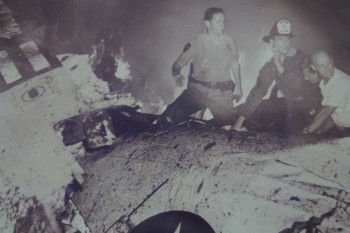 Rush Abry, a well-known Beaches photographer, managed to capture the only image of the crash site after wading through chest-high water to reach a tiny island where the patrol plane crashed and burned upon impact. His stunning black-and-white photo of four first-responders straddling the plane’s crumpled fuselage as a fire blazes behind them won a state press award for on-the-spot photography.
Abry’s waterfront home in Jacksonville Beach overlooks the marsh and the scene of the crash. A few years ago, the widow of Charles M. McLarty, a 26-year-old crewman on the aircraft, traveled to Jacksonville Beach to pay homage to her late husband. She and Abry posed for a picture on the back patio of Abry’s home with the island hauntingly looming in the background. Shortly after the tragic accident, Sheila McLarty (now Moore) and Lt. Myers’ widow, Jeanne Hand, invited Lt. Garrett’s widow, Linda, to dinner. Each had suffered a tremendous loss, but their friendship didn’t suffer because of it. Recalled Hand 45 years later: “I wanted Linda to know that we were not upset with her, and that there were no hard feelings.”
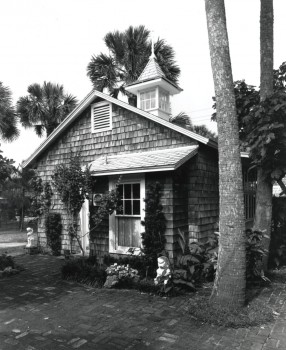 The unique and memorable buildings of Atlantic Beach have greatly contributed to the character of this community throughout its life. The Continental Hotel – a monumental structure built at a time when there were almost no other buildings around – set the tone for the future of the community. The people who shaped Atlantic Beach in its early days hoped to form a more upscale community that drew in more elite residents. From converted carriage houses to a “hobbit house,” this trend has led to some of the most unique structures in the Beaches communities. The buildings mentioned below are just a few examples of the architecture found in Atlantic Beach throughout the years.
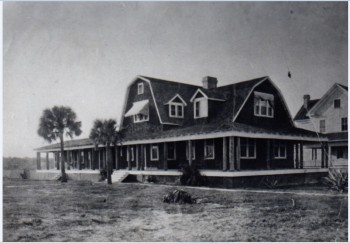 The Bull House. Built around 1902, this house represented some of the earliest construction in Atlantic Beach. The home of several members of the Bull family over the years, it was a longtime landmark in Atlantic Beach.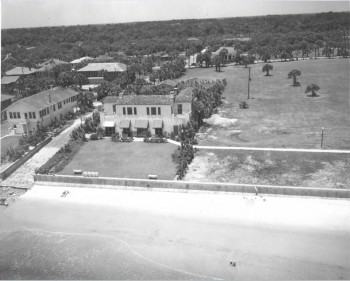
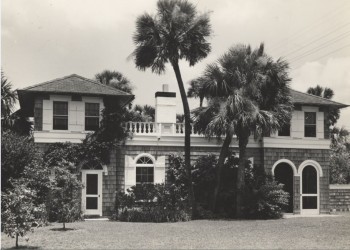 Abri. This Italian Renaissance Revival style house built around 1934 was originally owned by Broadway legend Lawrence Haynes. In his autobiography, “Joyous Life of a Singer”, Haynes attributes the name to a phrase used in World War I: “Vite a L’Abri,” which meant “Quick to the place where we are safe – where no harm can reach us.”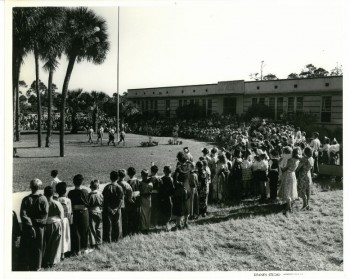
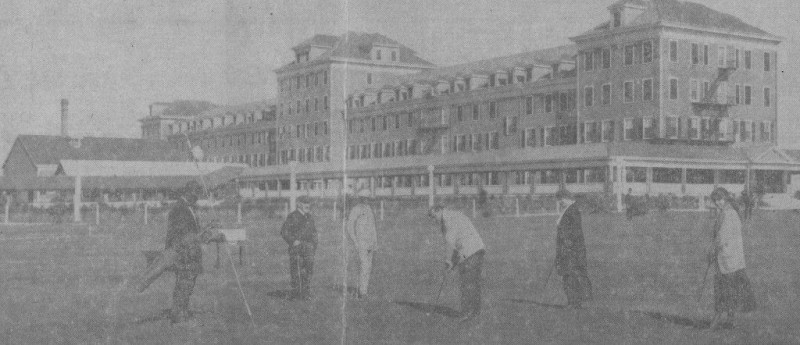 When discussing golf in the Beaches area, most will look towards Ponte Vedra Beach, particularly TPC Sawgrass and the annual PLAYERS Championship. However, Atlantic Beach has its own storied history in the world of golf.
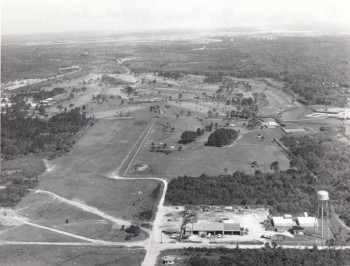 The Selva Marina Country Club, a project initiated by Harcourt Bull, Jr., opened in 1958. Well received in the area, it featured a golf course designed by E. E. Smith and quickly grew to include tennis courts, a swimming pool, and a residential community. Selva Marina soon became an important and internationally recognized part of the community. It is best remembered as the birthplace of the Greater Jacksonville Open in 1965. Years later, this tournament became what is now known as the PLAYERS Championship. Playing host to many of golf’s greatest players including Arnold Palmer and Jack Nicklaus, Selva Marina created a name for itself in golf history. The Lady Jacksonville Open was also held at Selva Marina in 1975.
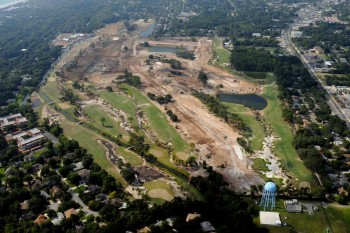 Today, the new Atlantic Beach Country Club continues Atlantic Beach’s golfing legacy at the site of old Selva Marina Country Club. In addition to the 6,815 square foot course redesigned by Erik Larsen, Atlantic Beach Country Club currently includes a neighborhood with 178 homesites, tennis courts, fitness facility, a junior Olympic swimming pool, and a 16,000 square foot clubhouse. Opened in January 2015, the revitalized 18-hole course was named as one of the nation’s Best New Courses by Golf Digest Magazine in 2014. The Web.com Tour Championship, part of the PGA TOUR, will be held at ABCC in Fall 2017.
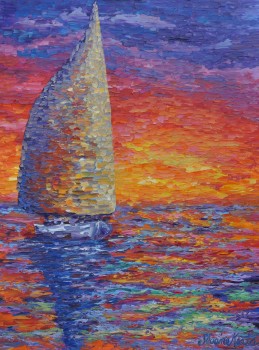 The winner of the 2017 Beaches Art Fest Poster Contest is Sloane Keats of Indialantic, Florida. Keats uses a layering technique and vivid colors to create a captivating texture in her paintings. Her entry “Alone” captured the essence of the event and its coastal community. “I bring a contemporary style to a traditional way to paint. Focusing on texture, color, pattern” said Keats.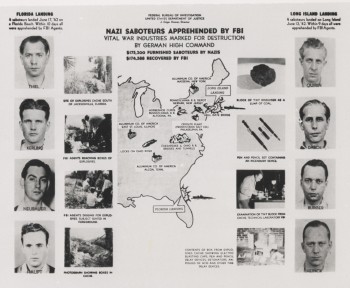
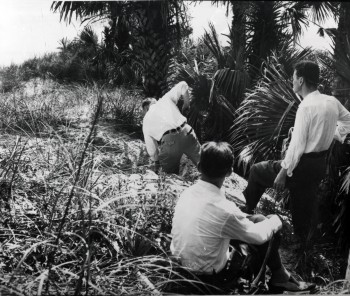
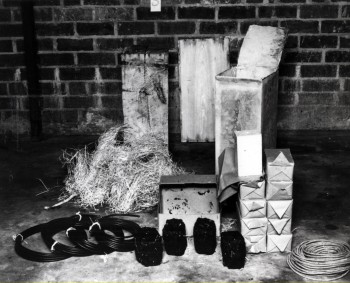
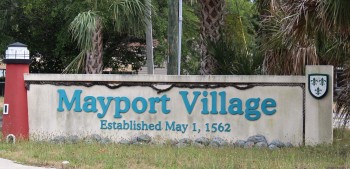
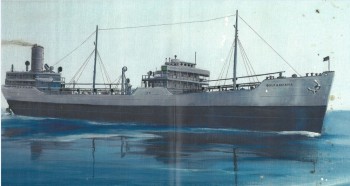 The night of April 10, 1942 started as a typical Friday night for people in the Beaches area. Jacksonville Beach was teeming with crowds kicking off their weekend with a visit to the boardwalk amusements, attending a dance at the pier, or catching the latest movie at the local theater. At approximately 10 p.m., however, the night took a very different turn.
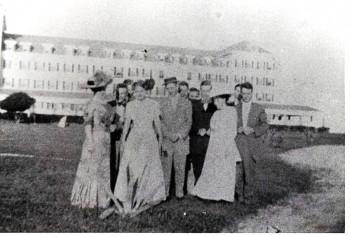 The Continental Hotel, constructed on the oceanfront in Atlantic Beach, opened in June of 1901. While it still featured luxury accommodations like Flagler’s other Florida resorts, it was simpler in design than hotels like the Ponce de Leon in St. Augustine. The hotel featured its own golf course, a detached veranda that wrapped around the hotel for lounging, an 800 foot ocean pier—the Atlantic Beach Pier—for fishing, picturesque drives around the area, and automobiling (racing) along the shore. Stretching along the oceanfront at 447 feet long and 47 feet wide, the wooden hotel provided a grand and palatial figure at the Atlantic Beach seashore. The building was yellow—a specific shade used by the FEC—with green shutters, accommodations for over 200 people, and a dining room that could seat 350 people. In advertisements for the hotel, the building was described as having an architectural design which was “perfectly balanced and pleasing to the eye” with its symmetry.
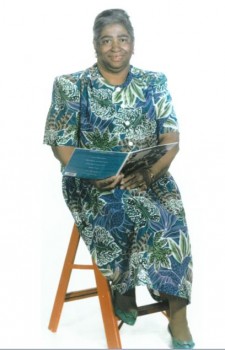 Margaret McQueen was a lifelong advocate for residents of the Beaches community and the first African American elected to the Jacksonville Beach City Council. She was born February 5, 1940, in Jacksonville Beach, Florida. In 1958, McQueen moved to Indiana where she started a family and returned to the Beaches area in 1969. Newly divorced and the mother of four, McQueen enrolled at the University of North Florida and graduated in 1974 with a degree in education. As a mother and second grade teacher at Seabreeze Elementary School, McQueen saw the issues of drugs, crime, and poverty eroding the Beaches neighborhoods. In 1989, she lead the Jacksonville Beach Community Action Co-op to address community issues of crime and to further increase the cooperative partnership between citizens and police.
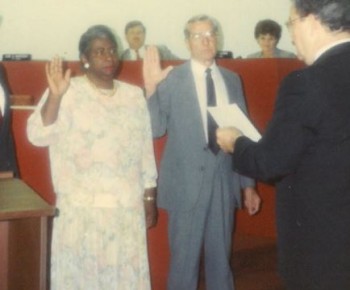 In 1991, at the age of 51, McQueen ran for the District 1 City Council seat. The election included the first ever district voting, which divided voters into geographic districts to choose their candidates. The District 1 City Council seat included the central and northeast sections of Jacksonville Beach, encompassing the same area where McQueen lived and raised her family. McQueen became the first African American elected to the Jacksonville Beach City Council on November 5, 1991, thus marking a historic moment for the Beaches community. She diligently served on the City Council from 1991 through 1994 and again in 1998. During that time, she saw the needs of the community improved. On June 29, 2013, McQueen passed away at the age of 73.
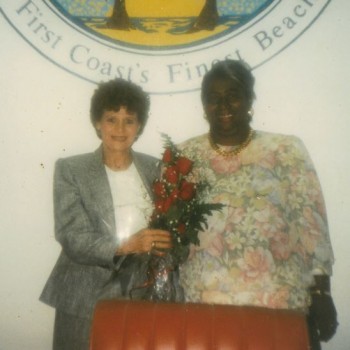 The legacy of McQueen included the positive change one woman brought to her community through her efforts of grassroots organizing and civic engagement. She brought equal representation to her district and stood firm in her convictions for the belief in the greater good not just of her community, but for all the surrounding communities of the Beaches. She strove to make the Beaches a better place to live and spearheaded the volunteerism of both blacks and whites. The Beaches community is forever grateful for the contributions and leadership of women such as Margaret McQueen.