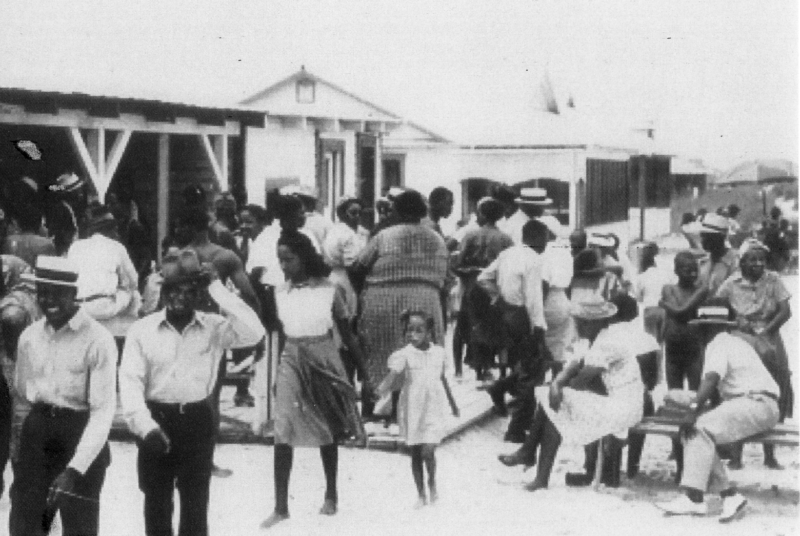
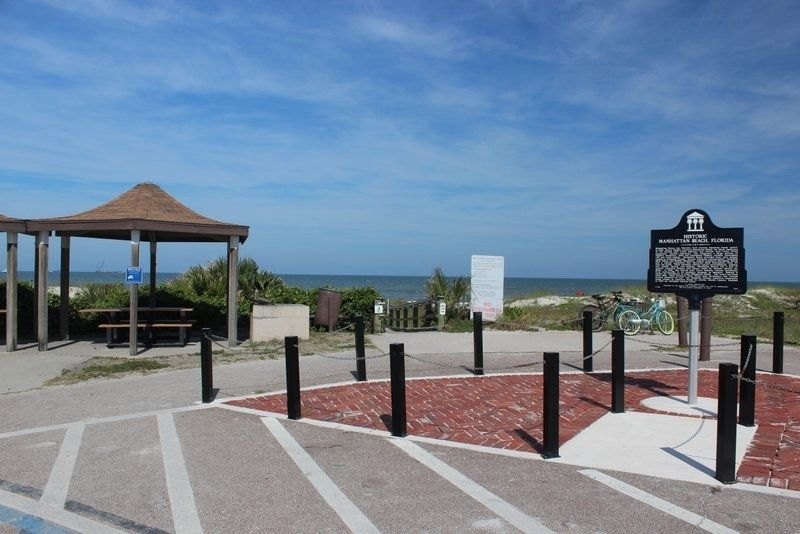
The Shane family was relatively new to Florida when Hurricane Dora hit on September 10th, 1964 with a 10 ft storm surge and 110 MPH winds. We moved from Canada in 1959. Neither we, nor NE Florida had any experience with a direct hit by a Cat 2 storm. On 8/28/64 we rode out tropical storm Cleo (downgraded from a Cat 3 hurricane) at our Beachcomber motel on the ocean between 4th and 5th avenue South. That would not be the case with Dora. We evacuated to the Hotel Mayflower downtown Jacksonville. With 7 kids, a dog named Rags and a cat, it was no small feat.
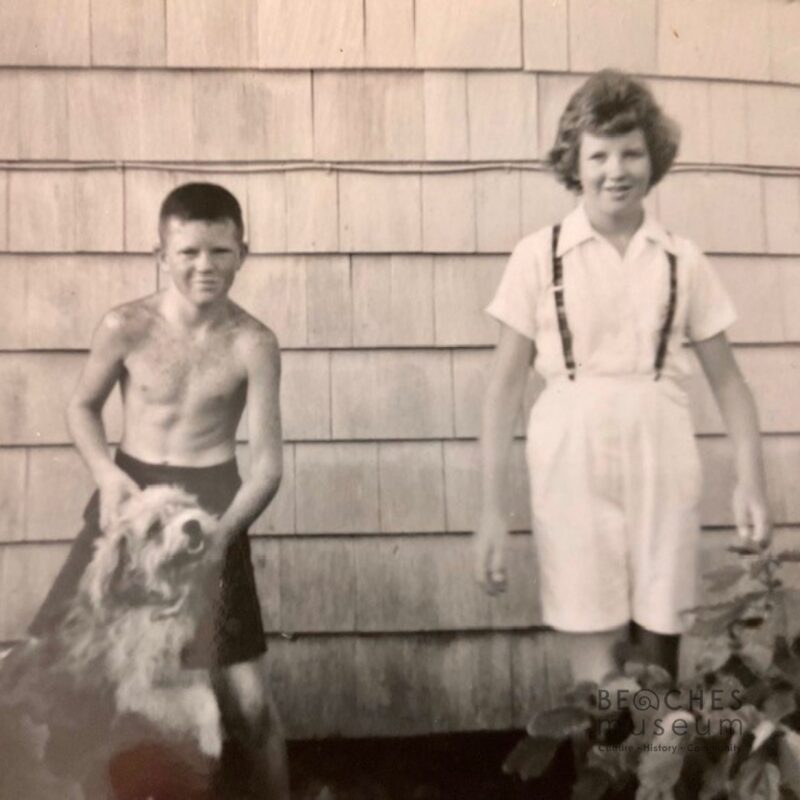
Our dog Rags, my brother Neil and sister Nancy. Rags, the wonder dog, got to be on TV and shake Lyndon B. Johnson’s hand in the same week of hurricane Dora.
At the final moment, we could not find the cat or the dog (Rags) but we had to go and get settled as the storm was already approaching. The kids cried about the animals so our dad returned to the beach to rescue them. He got Rags easily enough, but the cat fought him and ran off. The news cameras were airing an interview with him as he was one of the few people remaining on the Beach. We were visiting other Beaches residents in the hotel and saw dad on TV – more tears. Our mother, was watching a TV without sound in the next room and started screaming “he’s dead!” until someone turned the sound on.
We rode the storm out with little problems. Only a picture window exploding above a bed – glass everywhere. After the storm, we made our way back to the beach (power lines down and all). We were allowed early reentry to inspect our business. Had to park at the Homestead due to standing water. Watching for downed lines in murky sand water wasn’t possible. So we just had lots of strenuous reminders. Had to swim the final blocks as it was too deep for little kids. With the parents in the center, and a string of kids all holding hands, we made it to our house at 412 2nd street. All was good. We had water in the yard up to the top of the gas tank (a new diving platform).
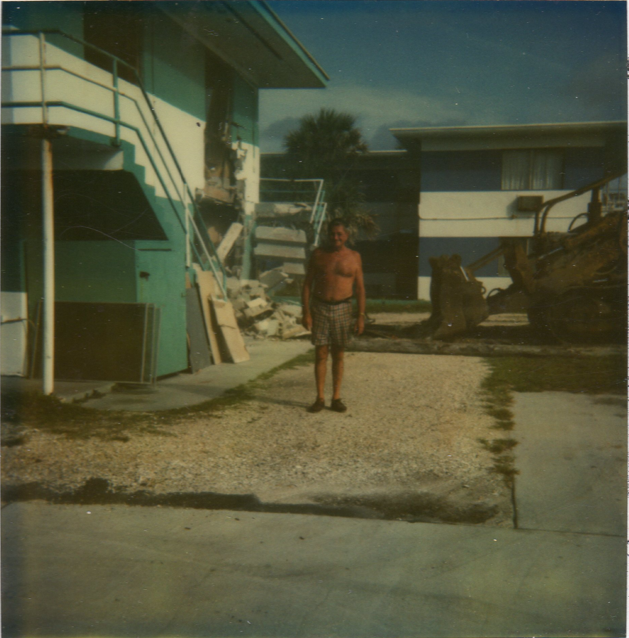
September 1964, after Hurricane Dora – Len Shane (Cathy Peper’s father) stands outside of the Beachcomber Motel on 411 First Street South, Jacksonville Beach.
The Beachcomber didn’t do as well. The pool was full of lawn furniture and tons of sand. The covered patio was in the pool. The rear motel wall had significant damage and 2 upper rooms collapsed. Sand, water, broken fencing and debris/appliances sunk on the beach everywhere. The best news? Our seawall was intact and did its job. Our neighboring motels (Silver Sea and Killis’s) lost most of their seawall. Killi’s Grocer never reopened. My dad said it was because the Beachcomber was “on holy ground” as it is where the original St. Paul’s Chapel stood before moving twice. I later confirmed this with Father Kelly at St. Paul’s catholic church.
Recovery
As with any natural disaster, you start out on your own for water, food, securing shelter. The escapee cat also made it home. We also found glasses everywhere from a bar down the street. Everyone remembers the loud helicopters all over the Beach taking pictures. The massive amount of sand lost on the beach and the demolished seawall was breathtaking. The pier was seriously damaged. Before, you could walk on the Seawall from at least 16th avenue South past the boardwalk was all but gone. Soon to be replaced by huge boulders.
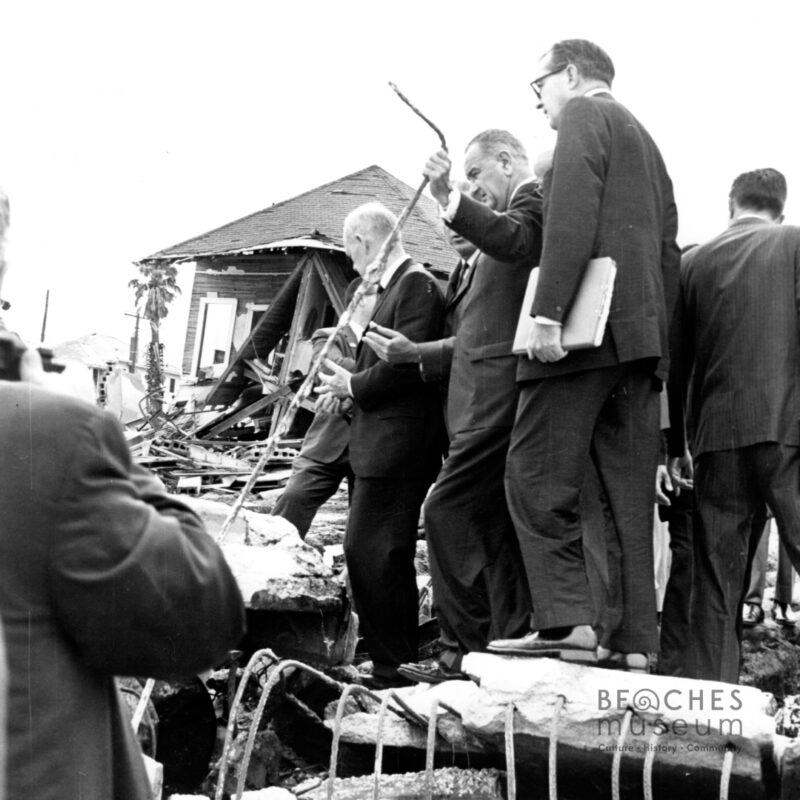
President Lyndon B. Johnson and his entourage surveyed the damage. When he got out of his convertible on 1st street around 16th Avenue, Rags took it as an invitation and walked right up to him, sat and put his paw up for a shake, which LBJ obliged. LBJ even asked Rag’s name. What a sight! The Beatles did a concert in Jacksonville shortly after the hurricane and had the audacity to complain of sour milk at their hotel.
Recovery was slow – weeks and months, a little patch of normal at a time. The first responders and support organizations like the Red Cross were amazing. We were lucky to have our gas back on early. It helped our neighbors who came over to heat meals. Neighbors helping neighbors. That’s a Beach thing! We moved to Rhode Island after Dora due to the loss of accreditation for Duval County schools and returned in 1967 so we missed most of the recovery.
Former Fletcher football star died at mysterious Texas Army base in 1954.
By Johnny Woodhouse
Faye Mickler Farace was curling her eyelashes in the girl’s bathroom at Fletcher High when one of her classmates burst in and said, “Oh, you have see this new guy, but I’m going to get him first.”
The “new guy” was Charles Harby “Buddy” Page Jr., a handsome transfer student from Landon High who had just moved to the Beaches in the fall of 1951.
“He was very good looking. I mean he was perfect,” recalled Farace, now 89. “All the girls were crazy about him. He dated a girlfriend of mine before he eventually asked me out at the end of our junior year. From then on, we started making our plans.”
New kid on the block
Photo courtesy of Johnny Woodhouse
A gifted athlete, Page quickly caught the eye of Fletcher High athletic coaches, including football coach Ish Brant, who was coming off a 7-2-2 season in 1950.
Brant was always on the lookout for fleet-footed halfbacks to buoy his T-formation offense and the 6-foot-tall, 165-pound Page fit the bill.
“He worked out with weights long before any of us did,” recalled Lee Buck, who played with Page on Fletcher’s 1951 and 1952 football squads. “He was very muscular and would literally bounce off tacklers.”
Page broke into Fletcher’s starting football lineup midway through his junior year. The following spring, he helped the Senators win the 1952 Class A state track title as a point-scoring sprinter and relay runner.
Off the playing field, Page bonded with the likes of Tommy Hulihan, Henry “Preacher” Stout, Stacy Barber and Buck, all members of the Class of 1953.
“Tommy’s house on Laura Street [in Neptune Beach] was our meeting place,” said Buck. “His mother treated us like we were her own sons.”
“We were all very close,” added Farace, a former Fletcher majorette and Homecoming Queen. “Tommy and Buddy were the best of friends. It was a wonderful time back then. About the worst thing we did was smoke cigarettes.”
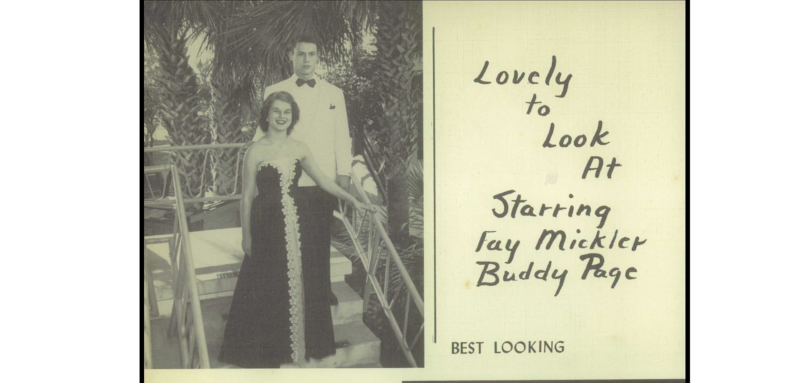
In 1953, Page and Farace were voted “Best Looking” in the yearbook.
“I wonder if that’s Fay Mickler driving up to the theater in that big limousine. She’s quite a celebrity with her titles of Miss America and Mrs. Charles Page Jr., that famous professional football player,” the yearbook’s “class prophecy” section predicted.
Big man on campus
Photo courtesy of Johnny Woodhouse
Fletcher opened the 1952 football season with a dominating 33-18 victory over Live Oak Suwanee. Page scored the game’s opening touchdown to get the visiting Senators rolling. It would be the first of nearly a dozen TD runs for the speedy senior halfback whose name and image appeared in sports pages on a regular basis.
“Page is fleet of foot and capable of getting away for sizeable gains,” wrote sportswriter Rocco Morabito of the Florida Times-Union before Fletcher’s first home game of a season, a 35-6 triumph over visiting Miami Tech.
A photo and caption proclaiming Page a “breakaway threat” appeared in the T-U sports pages, leading up to Fletcher’s game with Clearwater Central Catholic.
Heading into the season finale against Lake City on Dec. 14, 1952, Brant, Fletcher’s silver-haired head coach, told a T-U sportswriter, “Page offers a terrific backfield threat and if we need one or two yards, he’ll blast in there and get it.”
A week before the Lake City game, which was played at the Gator Bowl, Page and teammate Larry Adams, Fletcher’s top scorer and leading pass catcher, were both offered football scholarships to the University of Florida.
Adams (70 points) caught more than 10 TD passes for the Senators in 1952 and handled all the punting and extra-point kick duties.
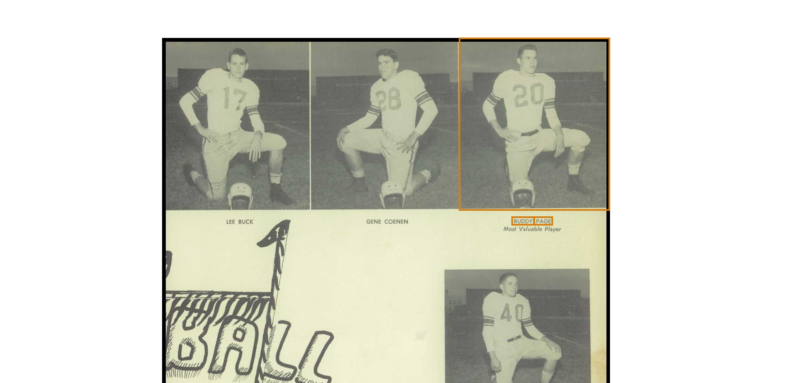
Page (66 points), who averaged 8.5 yards per carry during the regular season, was Fletcher’s most valuable player.
“Coach Ish Brant is high in his praise of both boys, and feels they had a heavy hand in helping his team to a 9-2 season, the best record Fletcher ever has posted,” The Jacksonville Journal reported.
One final football fling
Photo courtesy of Johnny Woodhouse
In mid-August 1953, Page and Adams, along with Fletcher’s Bert Bibby and John Veal, participated in the North-South All-Star Game at the Gator Bowl. The fifth annual event featured many of the best football players in the state, including Miami quarterback Lee Corso, who led the South All-Stars to a 33-6 win.
Adams caught an 18-yard pass in the game and Page was photographed carrying the ball while being chased by a pair of would-be tacklers. “The crowd was brought to its feet in the second quarter of last night’s all-star game as the North’s Buddy Page picked up eight years around left end,” a T-U photo caption read.
Page and Adams split up after the all-star game, with Adams heading off to play for the University of Florida and Page signing with in-state rival Florida State University.
When Page arrived in Tallahassee for the first day of drills on Aug. 24, 1953, FSU’s incoming freshmen class was considered “the best crop of newcomers ever lined up for the Seminoles.” In a team photo, Page is pictured sitting next to Fletcher grad Jimmy Messinese, one of FSU’s 34 returning lettermen.
Messinese, a backup linebacker, and Fletcher grad George Boyer, a starting defensive tackle, appeared in numerous games for FSU in 1953, but Page apparently left school before the football season began.
“His parents were pushing him to stay in college, but Buddy made up his mind to go into the Army,” Farace recalled. “His plan was to serve for two years and then play football for the University of Florida. He said we could live in some Quonset huts on campus that were reserved for married couples.”
Newly-minted MP
Photo courtesy of Johnny Woodhouse
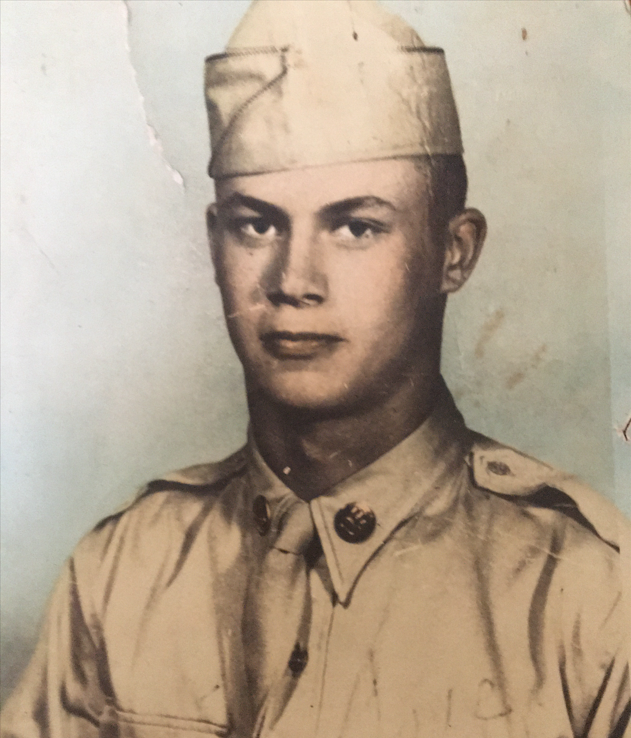
Page enlisted in the Army on Sept. 17, 1953, and completed basic training at Camp Gordon (now Fort Eisenhower) near Augusta, Georgia. From 1948-1975, Camp Gordon was home to the Army’s Military Police School.
After graduating from boot camp, Page was selected to attend 16 weeks of MP training at Camp Gordon’s Provost Marshal General Center. The training included eight weeks of advanced infantry tactics and eight weeks of training in the duties and techniques of being a military policeman.
“MPs are among the best trained, best uniformed and sharpest soldiers in the United States Army, and ready to answer the call from whatever spot on the globe it might come,” proclaimed a black-and-white training film produced at Camp Gordon in 1953.
For Page, answering the call meant reporting to the 8455th Military Police Company at Killeen Base, a remote Army installation in central Texas and one of three sites in the country for the storage and assembly of nuclear weapons during the early years of the Cold War.
“I remember driving up to Camp Gordon with Buddy’s parents, Harby and Roberta Page,” said Farace. “Once Buddy got to Killeen, we never saw him again.”
Code name Site Baker
In 1947, Killeen Base, now known as Fort Cavazos and before that Fort Hood, was one of several ideal spots to store the nation’s nuclear arsenal, according to The Fort Hood Herald. “The idea was (the sites) were built inland to a point where, at the time, the Soviet Union didn’t have the capability to reach in and attack,” said Charles Lauer, formerly director of the Fort Hood Underground Training Facility, which once housed the atomic bomb.
According to Lauer, military personnel stationed at Killeen Base were forbidden to enter parts of the facility under Atomic Energy Commission control. “At the time, when the country’s nuclear arsenal was in its infancy and bombers were the only reliable delivery system, Killeen Base operated on a complex set of protocols,” Lauer said.
Dotted with ammunition bunkers, concrete guard towers and razor-wire fences, Killeen Base, also known by its code name Site Baker, was off limits to visitors and area residents. “Security was extremely tight, producing many stories and rumors about what went on inside,” according to another published report.
One rumor involved a couple of deer hunters who accidentally strayed onto the base. The hunters were reportedly arrested by MPs and held until it was determined that they were not communist spies.
“The only way you can leave here is if you go crazy or shoot someone and then they ship you out,” Page told Farace in a 1954 letter. “I can’t leave this base no matter what. I won’t leave here until I’m out of the Army.”
When Page arrived at Killeen Base in January 1954 at age 18, he quickly learned that leaves were rarely granted, and transfers were out of the question.
“I went to the CO about going into the Airborne, but found out I couldn’t,” he told Farace in another letter. “The most important thing to me is having you with me, so let me know when you want to get married. I will start working things out. Let me know what kind of ring you want or if you want to wait until I come home. Love you forever, Buddy.”
Cut down in his prime
On July 1, 1954, a U.S. Army plane crashed during a training flight at Kelly Air Force Base, in San Antonio, Texas, killing two men, including John McBride, a 20-year-old student pilot and a promising running back who played on Alabama’s 1953 Southeastern Conference championship team.
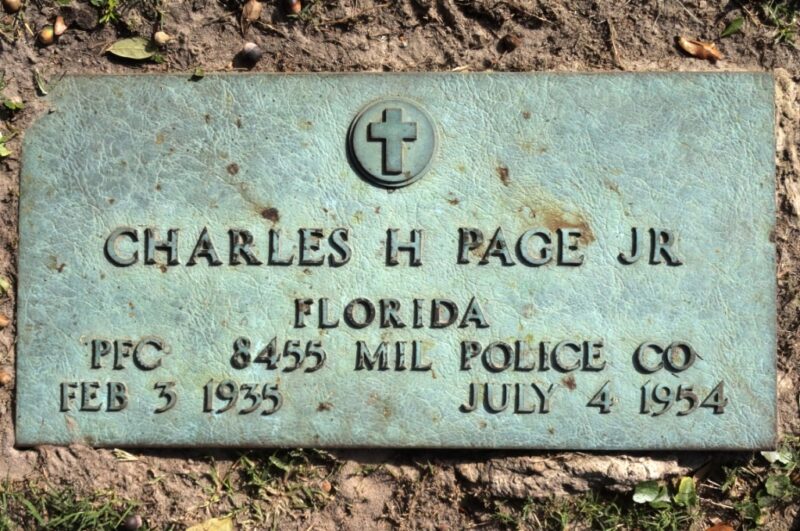
Page, who turned 19 on Feb. 3, 1954, was also cut down in his prime that July after being fatally shot while on vehicle patrol in a classified area of Killeen Base.
According to a newspaper report, Page, who was riding as a passenger in a patrol vehicle, was shot in the chest by a sentry on July 4, 1954, after allegedly failing to answer the sentry’s challenge.
“The deceased fell from the vehicle and died shortly thereafter approximately 20 feet from the vehicle,” a report said. The MP driving the patrol vehicle was not injured. At the time, military officials said the sentry would be court martialed.
When he was shot, Page was dressed in Army fatigues and carrying only a pocketknife and an MP whistle, according to medical records.
“Buddy reportedly told the guard, ‘You know who I am,’ but the guy still shot him,” said Buck. “His death was such a shock and a senseless waste of life.”
A nightmare that lingers
Photo courtesy of Johnny Woodhouse
Farace was returning home from a trip to Daytona Beach when the tragic news reached her.
“My mother met me outside our home on Mickler Road and said, ‘Buddy has been killed.’ I don’t remember much after that,” Farace recalled. “Somebody took me to Buddy’s house, and I stayed in a spare bedroom for a couple of days waiting for the train to bring his body back to Jacksonville. To this day, I don’t know how we got through it.”
Two MPs from Page’s unit, Pfc. James L. Morris and Sgt. Clarence E. Van Nest, accompanied the steel casket to the Jacksonville train station and served as official military escorts during the funeral. Buck said he and some of Page’s closest friends took turns standing vigil at the funeral home after Page’s remains were prepared for viewing.
A memorial service was held a few days later with the Rev. Malcolm B. Knight, pastor of Southside Baptist Church, and the Rev. Henry Stout of Community Presbyterian Church in Atlantic Beach, presiding. Page’s remains were buried at Jacksonville’s Oaklawn Cemetery with full military honors.
Four days after Page was killed, U.S. Sen. George A. Smathers of Florida requested a full investigation of the shooting. “Smathers said he acted immediately after receiving the request from Page’s father,” according to a front-page article in the Florida Times-Union. “Sen. Smathers said he has also called the Judge’ Advocate General’s Office and was assured by Major Gen. Albert C. Smith that the investigation would be followed through by that office,” the newspaper said.
On June 28, 1955, U.S. Rep. Charles Bennett of Jacksonville introduced a bill (H.R. 7074) in the U.S. House of Representatives “for the relief of Mr. and Mrs. Charles H. Page” in the sum of $25,000.
The bill was referred to the House’s Judiciary Committee and forwarded to the Office of the Quartermaster General, which was directed to prepare a report for Congress.
In March 1967, Bennett’s bill was finally passed in the U.S. House and sent to the U.S. Senate for consideration. By then, the death benefit had been reduced to $14,430, according to published reports.
It’s unclear whether Page’s parents ever saw any compensation. Roberta Page died in 1969, the same year Killeen Base was officially decommissioned as a nuclear storage bunker. Charles Harby Page Sr., who worked for the U.S. Corps of Engineers, passed away in 1973.
“Buddy’s parents never accepted the Army’s explanation for what happened to their son,” Buck said. “His death destroyed them. He was their whole life.”
Farace, who went on to marry twice and has seven children and 10 grandchildren, keeps a portrait of Page in a dresser drawer.
“Even after Buddy was gone, his parents would continue to visit me and my parents,” Farace said. “My parents adored Buddy. His death was a nightmare for all of us.”
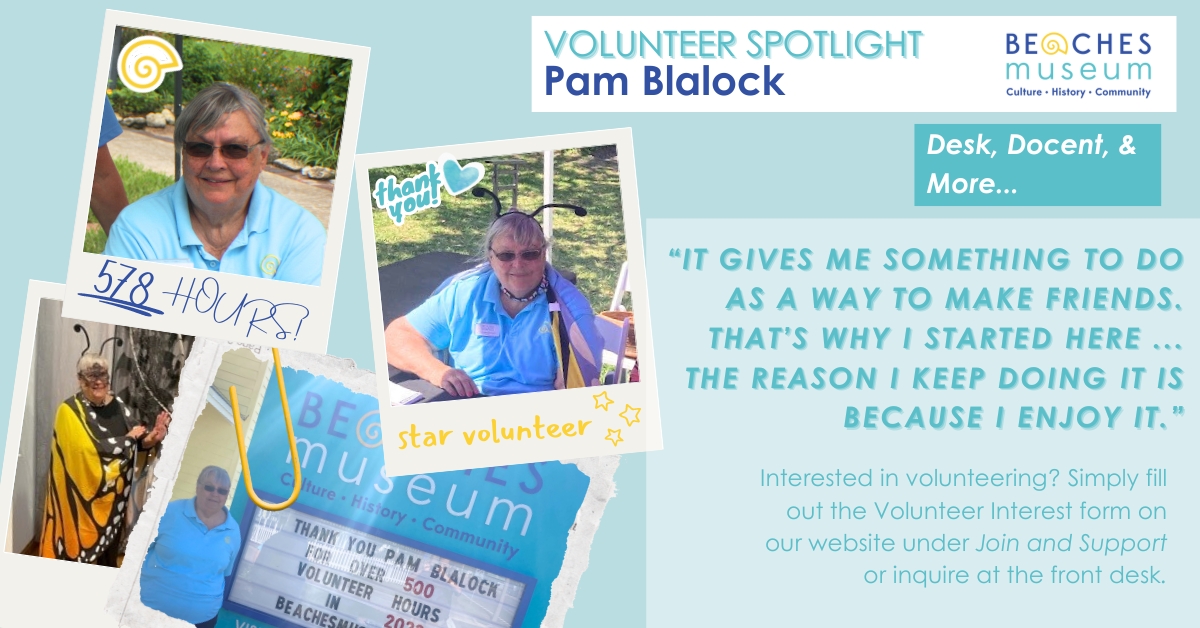
Pamela Blalock recorded 578 hours last year, more than any other volunteer at the Beaches Museum in 2023. We are excited to honor her with our first-ever Volunteer Spotlight! We took a minute to sit down with Pam and ask her some questions about her time with the museum. Read on for the full interview!
Interviewer: You’ve got the most volunteer hours. Congratulations on getting all of those hours!
Pam: Thank you.
What did you spend your time doing before committing so much time to volunteering here at the Beaches Museum?
I was working before I retired.
What did you do for work?
I was the HR Manager for the National Air and Space Museum at the Smithsonian.
Do you have a favorite collections item, and if so, what is it?
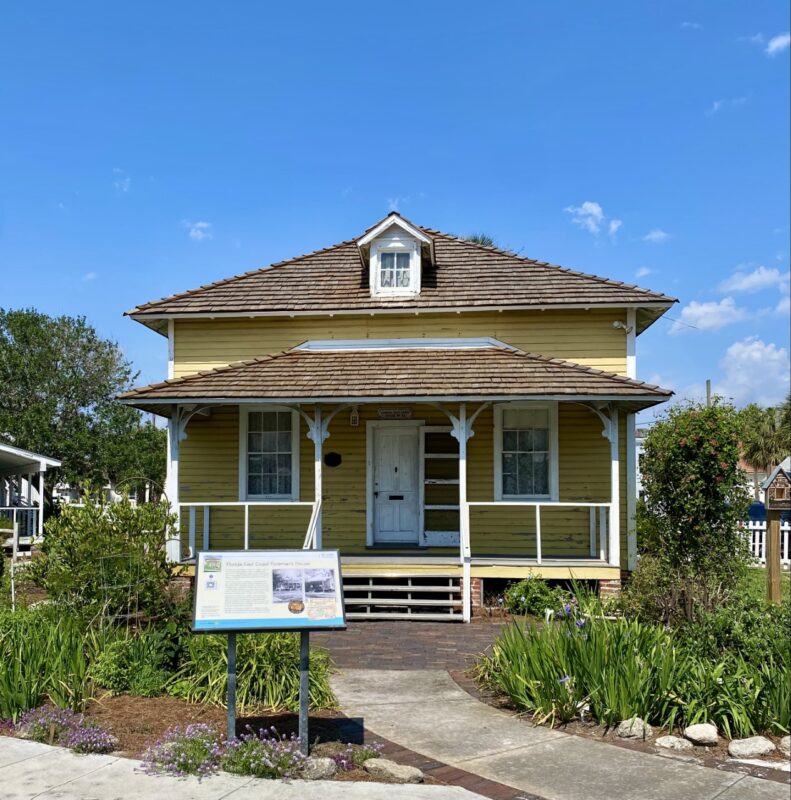
Ooh… I think I like the Foreman’s House the best.
The Foreman’s House in the History Park
What do you like most about it?
I find the kitchen fascinating, and, um, I don’t know–the adult potty chair. [laughs]
My next question was, do you have a favorite place in the History Park, but I guess–
Oh, well that answers that one, yes.
Do you have a favorite… plant? In the garden?
Oh, I don’t know one plant from another. If it’s not a rose, I don’t know what it is. [laughs]
What has been the most rewarding aspect of volunteering here for you?
Just meeting new people. Getting to make friends and meet people from all over.
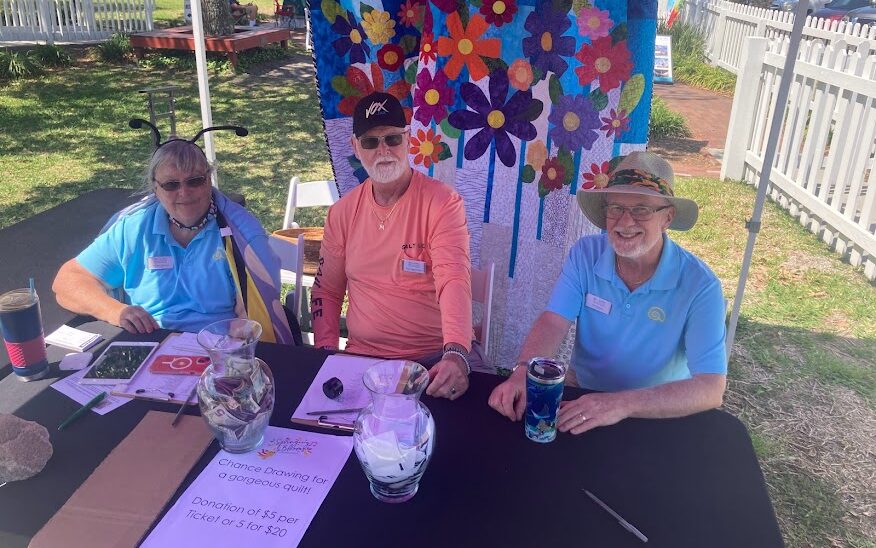
Pam Blalock, Paul Meyerherm, and Tim Keeley at Springing the Blooms 2023
Is there a moment or memory that stands out about your time here?
Other than Kate? [laughs]
Do you have any advice for new volunteers?
Just enjoy your time. I mean, I enjoy it. The reason I keep doing it is because I enjoy it–and it gets me out of the house. It gives me something to do as a way to make friends. That’s why I started here.
You have made lots of friends here!
Well, and I started out at the Smithsonian as a docent doing dinosaur tours! So I was kind of–that gave me something to do. It was just a natural flow once I retired and moved down here.
Did you have a favorite dinosaur at the Smithsonian?
Yeah, the parasaurolophus.
I’ll have to look up how to spell that one.
I just love the name!
If you opened your own museum, what would it be the museum of?
Probably dinosaurs. [laughs]
Interested in volunteering? Simply fill out our the form below or ask for an application at the front desk!
The Beaches Museum will be closed on Saturday, January 20 for a private special event. We will resume normal operating hours on Sunday, January 21! We look forward to seeing you!
The Beaches Museum will be closed on Wednesday, August 30 so that our volunteers and staff can stay off the roads during the impacts of Hurricane Idalia. If conditions allow, we plan to re-open for our regular hours, 10-4, on Thursday. Please stay safe and we look forward to seeing you soon!
The Board of Directors of the Beaches Museum recently adopted the proposed 3-year Strategic Plan for the organization. Chaired by Doris McNeill, the Strategic Planning team was composed of board members, volunteers, staff and community leaders and was facilitated by Jana Ertrachter. The group worked for 6 months to compile data, surveys and other relevant information to distill the next three years of the organizations work in to four main goal areas:
Cultivate human and financial resources to strengthen the future of the Museum
Spark and nurture curiosity, conversation, and involvement with the mission of the Beaches Museum
Create and foster an atmosphere of belonging and ownership for everyone
Reinvent and transform the current exhibit experience
Funded in part by The Community Foundation, the comprehensive nature of the strategic planning process will help to guide the future of the Beaches Museum. The Executive Summary of the plan can be viewed HERE.
Researched and prepared by Sarah Sharp, volunteer and occasional writer for the Beaches Museum.
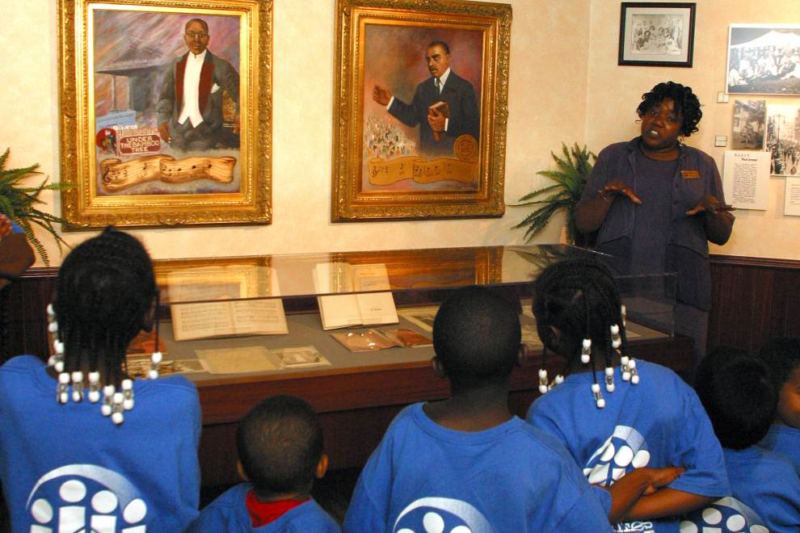
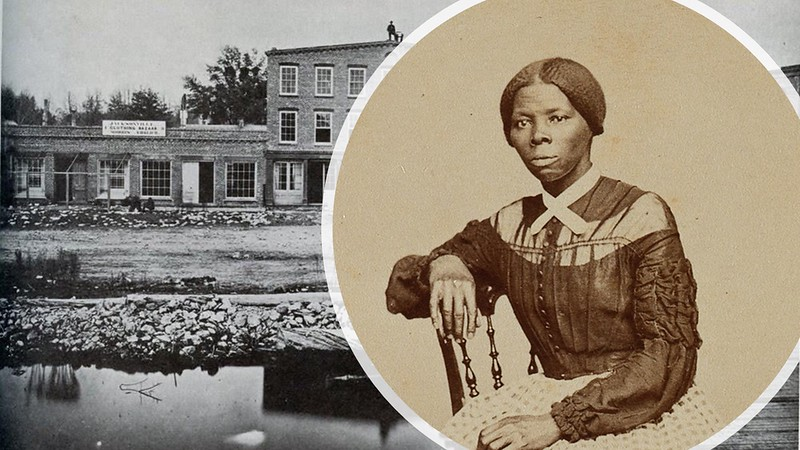
Introduction
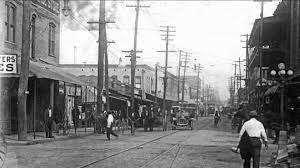
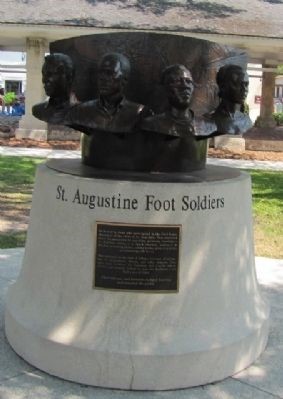
For educators interested in Black and African American heritage and history in northeast Florida, especially in Jacksonville, St. Augustine, and the Beaches, numerous people, neighborhoods, cemeteries, buildings, sites, museums, and special collections are available for covering this topic. Topics and sites are richly woven together across heritage and history, place and time, local and national.